Ulrich Richter · 12 October 2026
Shifting Focus: How Feature Prioritization Changes During SaaS Scaling Affect Long-Term Retention Rates
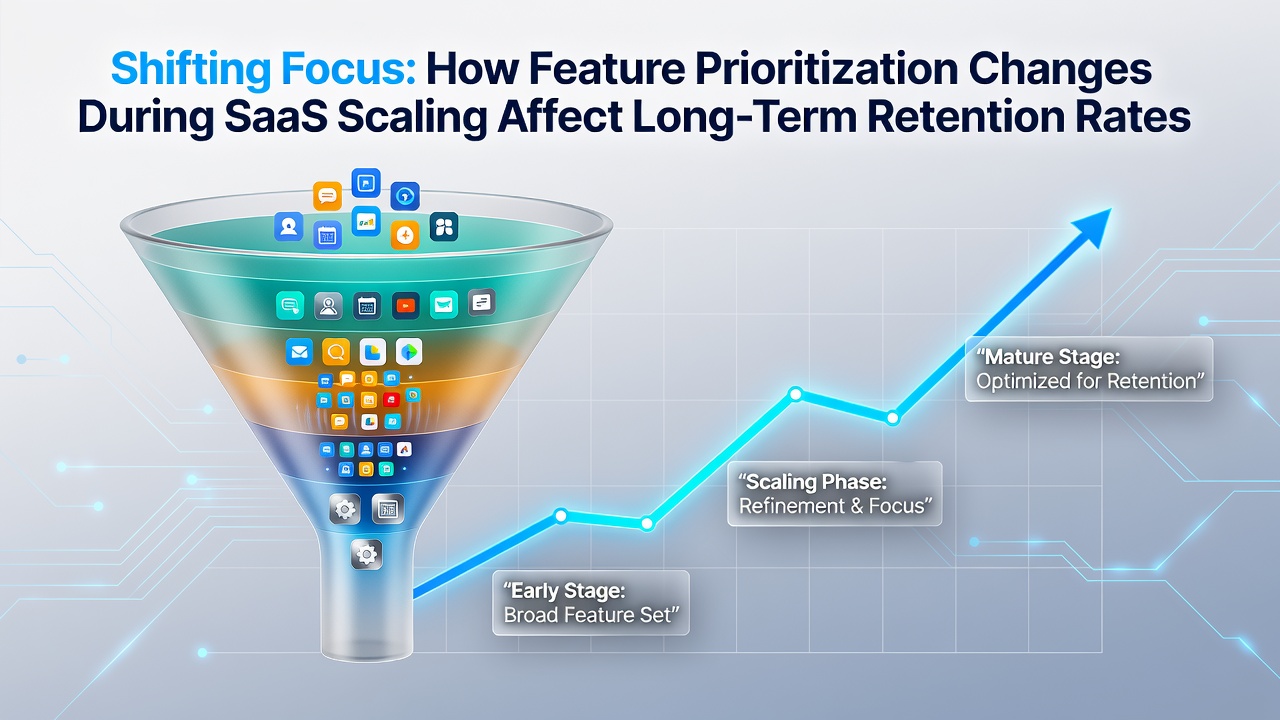
Feature prioritization in SaaS companies evolves as organizations move from initial product launches to broader market expansion, and researchers track these shifts because they correlate with changes in customer retention patterns over multiple years. Early development cycles often emphasize core functionality that solves immediate user problems while later stages introduce advanced capabilities such as automation tools, compliance modules, and third-party integrations that address enterprise requirements. Data from industry analyses indicate that companies which adjust their roadmaps without maintaining baseline usability for existing segments experience measurable dips in renewal rates within 18 to 24 months after major scaling initiatives.
Initial Prioritization Patterns in Early-Stage SaaS
Founders and product teams at seed and Series A companies direct resources toward features that demonstrate clear value within the first 30 days of user onboarding because acquisition costs remain high and feedback loops stay tight. Studies from academic institutions show that teams release frequent updates focused on reliability, basic reporting, and user interface simplicity during this phase. Retention metrics at this stage depend heavily on activation rates, and organizations that delay non-essential enhancements preserve higher trial-to-paid conversion figures according to longitudinal reviews of venture-backed platforms. Observers note that these early decisions set expectations among initial customer cohorts who later become reference accounts during expansion efforts.
Adjustments That Occur as User Bases Expand
Once monthly recurring revenue crosses defined thresholds and headcount increases, prioritization frameworks shift toward scalability features including role-based access controls, API extensibility, and audit logging that enterprise buyers request in procurement processes. Companies allocate engineering cycles to these areas because larger contracts carry higher average revenue per user, yet this reallocation can reduce attention on incremental improvements that smaller accounts still require. Figures from 2025 platform audits reveal that retention among customers with fewer than 10 seats declines when update frequency for core workflows drops below quarterly intervals. Teams that implement parallel tracks for both enterprise and SMB feature sets maintain more balanced cohorts, while those that consolidate around one segment observe churn concentration in the neglected group.
Retention Data Across Scaling Phases
Long-term retention rates reflect cumulative effects of these prioritization changes because customers evaluate ongoing value against competing solutions that continue to iterate on their specific needs. Research compiled by international economic organizations demonstrates that SaaS providers who sustain 80 percent or higher net revenue retention after Series C rounds typically maintain dedicated resources for legacy feature maintenance even as new modules launch. In October 2026 analysts reported that platforms introducing major enterprise suites without corresponding mobile or workflow optimizations saw 12 to 15 percent lower renewal rates among non-enterprise segments compared with peers who staggered releases. Those patterns emerge because users accustomed to rapid responsiveness interpret slower iteration as declining product attention, prompting evaluation of alternative vendors.
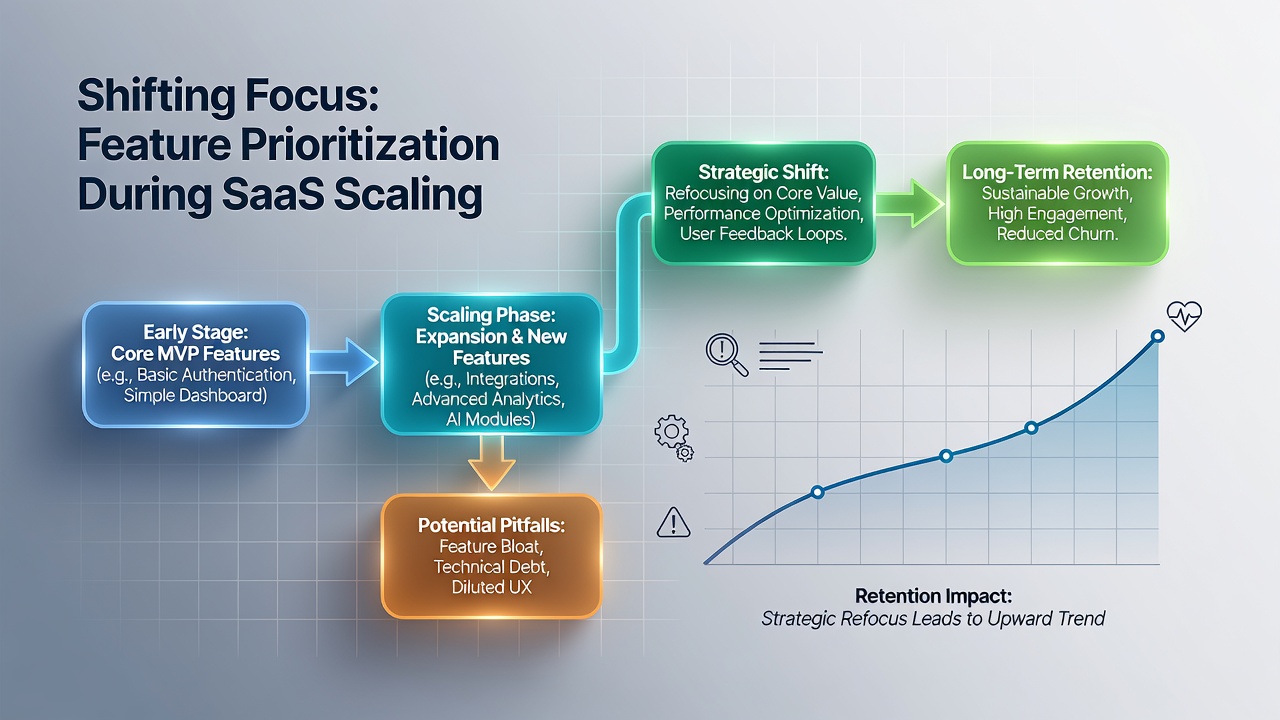
Case examples from mid-market companies illustrate how segmentation influences outcomes. One provider that introduced advanced analytics dashboards for large accounts simultaneously released lightweight customization options for smaller teams and sustained retention above industry averages. Another organization that paused minor fixes to accelerate compliance certifications experienced elevated downgrade activity among users who relied on those earlier capabilities. Metrics collected across hundreds of B2B platforms indicate that retention curves flatten when feature velocity remains consistent across user tiers rather than concentrating on the highest-revenue cohort alone.
Measurement Approaches and Industry Benchmarks
Organizations monitor these dynamics through cohort analysis that tracks feature usage against renewal dates, and they supplement internal data with external benchmarks published by research institutions. Reports from bodies such as the OECD digital economy division highlight how product decisions during growth phases correlate with multi-year customer lifetime value across regions. Teams also reference frameworks from university-led studies that quantify the impact of roadmap transparency on churn probability. When prioritization decisions become visible through public changelogs and user advisory boards, retention improves because customers anticipate future alignment with their requirements instead of discovering gaps after contract renewal windows open.
Conclusion
Feature prioritization evolves naturally during SaaS scaling, and the resulting retention patterns depend on whether organizations preserve support for established user segments while pursuing larger opportunities. Evidence from multiple data sources shows that balanced roadmaps, consistent update cadence across tiers, and transparent communication produce stronger long-term retention than concentrated focus on enterprise-only enhancements. Companies that review these correlations regularly adjust their planning processes to sustain both expansion and loyalty metrics as market conditions shift.