
Otto Lange · 28 September 2026
Navigating Data Compliance Challenges During Structural Evolutions in Online Service Platforms
Structural evolutions in online service platforms often involve mergers, acquisitions, cloud migrations, and rapid scaling that reshape how data moves through systems, and these shifts bring compliance obligations into sharp focus because regulations like the EU General Data Protection Regulation and the California Consumer Privacy Act require continuous accountability for personal information regardless of organizational changes. Platforms that expand through acquisitions must integrate disparate data architectures while maintaining records of processing activities, and failure to map data flows during these transitions can result in gaps that regulators identify during audits. Research from academic institutions shows that companies undergoing such changes frequently encounter issues with cross-border data transfers, especially when new subsidiaries operate in jurisdictions with conflicting data localization rules.
Key Drivers of Structural Change in Digital Platforms
Online service providers pursue structural evolution for reasons that range from market expansion to technological modernization, yet each pathway introduces distinct compliance variables because data collected under one entity’s policies may suddenly fall under another framework after a merger closes. When a platform migrates workloads to a new cloud provider, for instance, contractual clauses governing subprocessors must be renegotiated, and the receiving organization must verify that the provider’s security certifications align with existing obligations. Data from regulatory filings indicates that the volume of reported data breaches tied to migration projects rose steadily between 2023 and 2025, prompting oversight bodies to issue updated guidance on due diligence before infrastructure moves occur.
Acquisitions create additional layers because legacy systems often retain personal data collected under older consent mechanisms that no longer meet current standards, and integrating those datasets requires re-consent campaigns or lawful basis reassessments across millions of records. Observers note that platforms active in multiple regions must simultaneously satisfy the European Data Protection Board’s recommendations on data transfers and emerging rules from Canada’s Office of the Privacy Commissioner, which can differ on requirements for impact assessments during organizational restructuring.
Data Mapping and Inventory Requirements
Effective compliance during structural change begins with comprehensive data inventories that document categories of personal information, processing purposes, retention periods, and recipients, yet many platforms discover during due diligence that their existing maps omit shadow IT systems or third-party integrations introduced during earlier growth phases. Researchers at major universities have documented how incomplete inventories lead to over-retention of data that should have been deleted under storage limitation principles, and these oversights become visible once new leadership demands unified reporting across merged entities. Automated discovery tools help surface hidden datasets, but human review remains necessary to validate accuracy because algorithms can misclassify sensitive categories such as health or financial information.
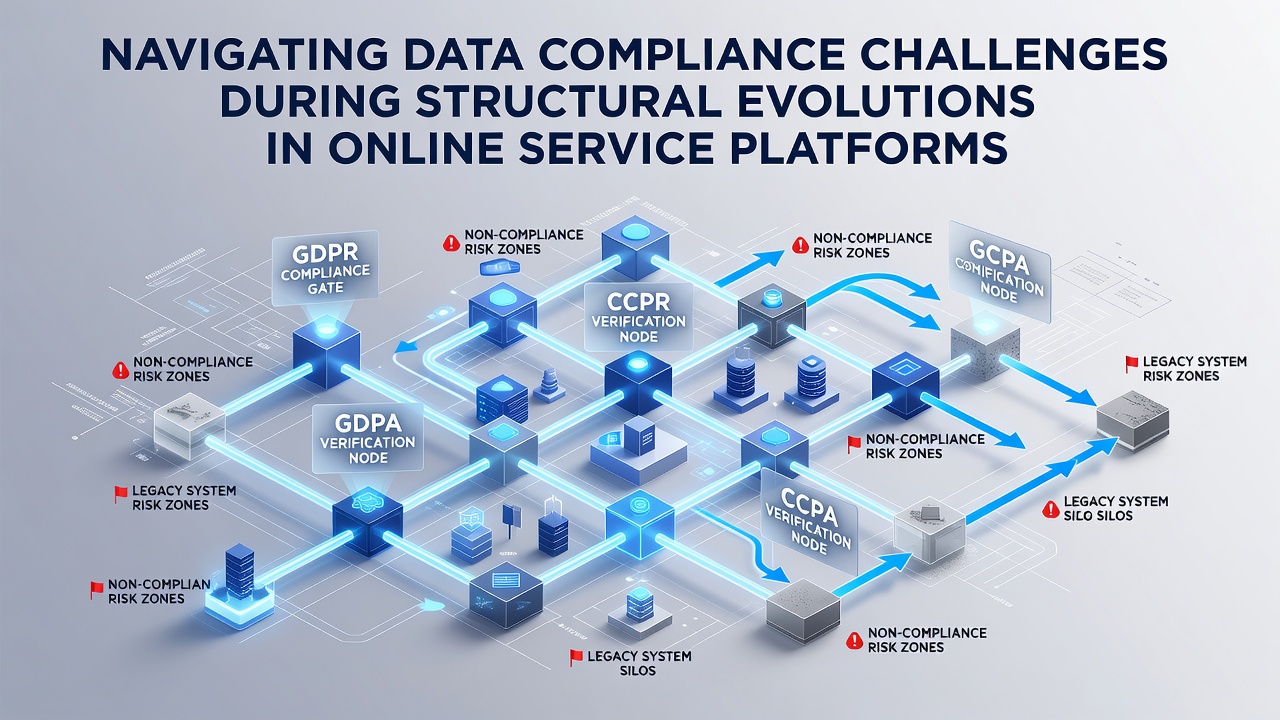
Platforms that complete acquisitions in September 2026 will face an additional milestone because several jurisdictions plan to implement updated breach notification thresholds and enhanced penalties around that period, forcing legal teams to accelerate inventory validation ahead of those effective dates. Integration teams therefore schedule phased audits that align technical data flows with legal obligations, and they document every decision point so that supervisory authorities can trace accountability if questions arise later.
Consent Management and User Rights Across Transitions
Structural changes frequently disrupt consent records because users who granted permission to one brand may not recognize the successor entity after rebranding or acquisition, and regulators expect platforms to maintain evidence that consent remains specific, informed, and freely given throughout the transition. When a platform updates its privacy notice to reflect new processing activities, it must provide clear mechanisms for users to withdraw consent without detriment, and this requirement applies even while backend systems are being consolidated. Figures from industry reports reveal that platforms investing in centralized consent management platforms before structural events experience fewer complaints to data protection authorities compared with those that attempt retroactive fixes afterward.
Requests for access, deletion, or portability also increase during periods of visible change, and service teams must route these requests through unified workflows that span previously separate databases. Those who have managed such transitions emphasize the value of maintaining audit logs that capture request receipt, verification steps, and fulfillment timelines because these records demonstrate compliance when supervisory authorities conduct investigations.
Cross-Border Transfers and Contractual Safeguards
Mergers and technology shifts often trigger new cross-border data flows that require fresh legal instruments such as standard contractual clauses or binding corporate rules, and platforms must ensure these mechanisms remain valid under evolving adequacy decisions. The Australian Information Commissioner has issued guidance that emphasizes ongoing monitoring of transfer impact assessments, particularly when recipient countries update their surveillance laws. Platforms therefore embed periodic review clauses in vendor agreements so that compliance documentation can be refreshed without renegotiating entire contracts each time a regulatory landscape shifts.
Conclusion
Structural evolutions in online service platforms demand proactive alignment between technical architecture decisions and regulatory obligations because data compliance cannot be retrofitted after systems are already live. Organizations that embed compliance checkpoints into project governance from the outset reduce the risk of enforcement actions, and those that maintain transparent documentation throughout transitions position themselves to demonstrate accountability to regulators across multiple jurisdictions. As platforms continue to evolve through 2026 and beyond, the ability to reconcile legacy data practices with new operational realities will remain a central factor in sustainable growth.